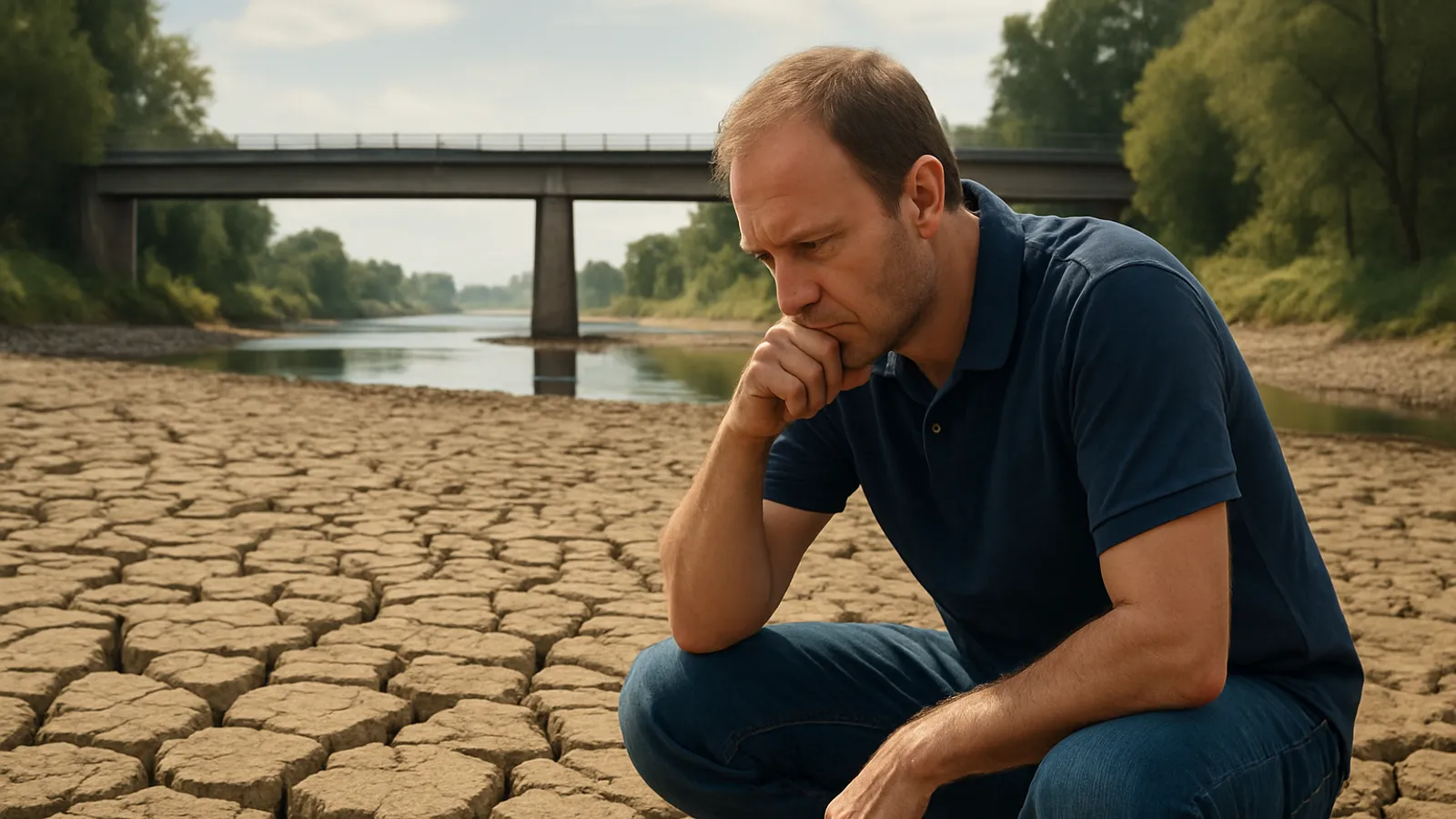
 AI-generated illustrative image · not a real photograph
CORRECTIV River Atlas: Germany’s rivers are drying up
Background & Context
According to its own account, CORRECTIV, a German nonprofit investigative newsroom, analyzed 356 monitoring stations from NIWIS, Germany’s nationwide Low Water Information System. It says that 60% of the sites studied have shown a significant decline in water levels or discharge during low-water conditions since 1992, and that particularly low values within the 34-year series occurred at just under 70% of the stations during the years CORRECTIV describes as drought years between 2018 and 2025.
Independent official data support the broader trend: Germany’s Federal Environment Agency records a significant increase in summer low-water days and a significant decline in average summer discharge. However, CORRECTIV’s specific figures of 60% and just under 70% were not reproduced from the raw data in this review.
The published presentation also leaves open how the 356 stations were selected, how missing data were handled and how statistical significance was determined. The reported reading of six centimeters at Kaub on the Rhine refers to a gauge reading relative to a reference datum, not to the actual depth of the river.
Article Profile

Dramatization
Pronounced
8/10
The article emphasizes events emotionally and relies on distinctly dramatizing language.
Moralizing
Moderate
4/10
Some passages carry evaluative or moral undertones.
Sharpening
Moderate
6/10
The article sharpens individual aspects but keeps some nuance.
Objectivity
High
7/10
The article is largely factual and fact-oriented.
Review Transparency
The CORRECTIV publication, the comparison sources and official information from Germany’s Federal Environment Agency and Federal Institute of Hydrology were reviewed. Official data support the broader trend of worsening summer low-water conditions but do not independently confirm CORRECTIV’s specific figures of 60% and just under 70%.
The publicly available article does not explain in sufficient detail how the 356 monitoring stations were selected, what level of data completeness was required, which statistical significance test was used, how changes to gauges or riverbeds were accounted for, or how the “drought years” from 2018 to 2025 were defined. Water level and discharge are not the same: gauge readings can also be affected by changes in the riverbed.
The cited six-centimeter value at Kaub is a gauge reading relative to a reference datum, not the river’s actual depth. The headline and several passages are distinctly alarmist and generalize beyond the strongest supported finding; expressions such as “low-water crisis,” “man-made catastrophe” and warnings about drinking water contribute to that framing.
Impact Check
Does it affect you?
60% impact
German consumers are affected because falling river levels impact drinking water and shipping.
Security risk?
10% impact
No direct security risk, as the focus is primarily on ecological and economic effects.
Historic?
75% impact
In recent years, rivers have repeatedly shown falling levels, indicating a long-term development.
Why is this article's headline most likely mostly true
The claim is mostly true: Independent official data confirm a long-term worsening of summer low-water conditions in German rivers and a decline in summer discharge. Exceptionally low levels on several major rivers are also independently documented.
However, the specific figures of 60% and just under 70% come from CORRECTIV’s own analysis and were not independently reproduced by the comparison sources used. Moreover, “Germany’s rivers are drying up” is considerably more sweeping than the evidence supports: what is documented are widespread low-water and declining-flow trends with regional differences, not a nationwide drying up of Germany’s rivers.
This analysis is based on a journalistic report by correctiv.org. The rating and context were produced with AI assistance.
AI Transparency
This analysis was produced, structured and editorially reviewed with AI-assisted systems. The rating refers to the specific statement examined and is based on the sources cited. The cover image is an AI-generated symbolic image and is not a documentary photograph of the event described.
Methodology & AI Transparency