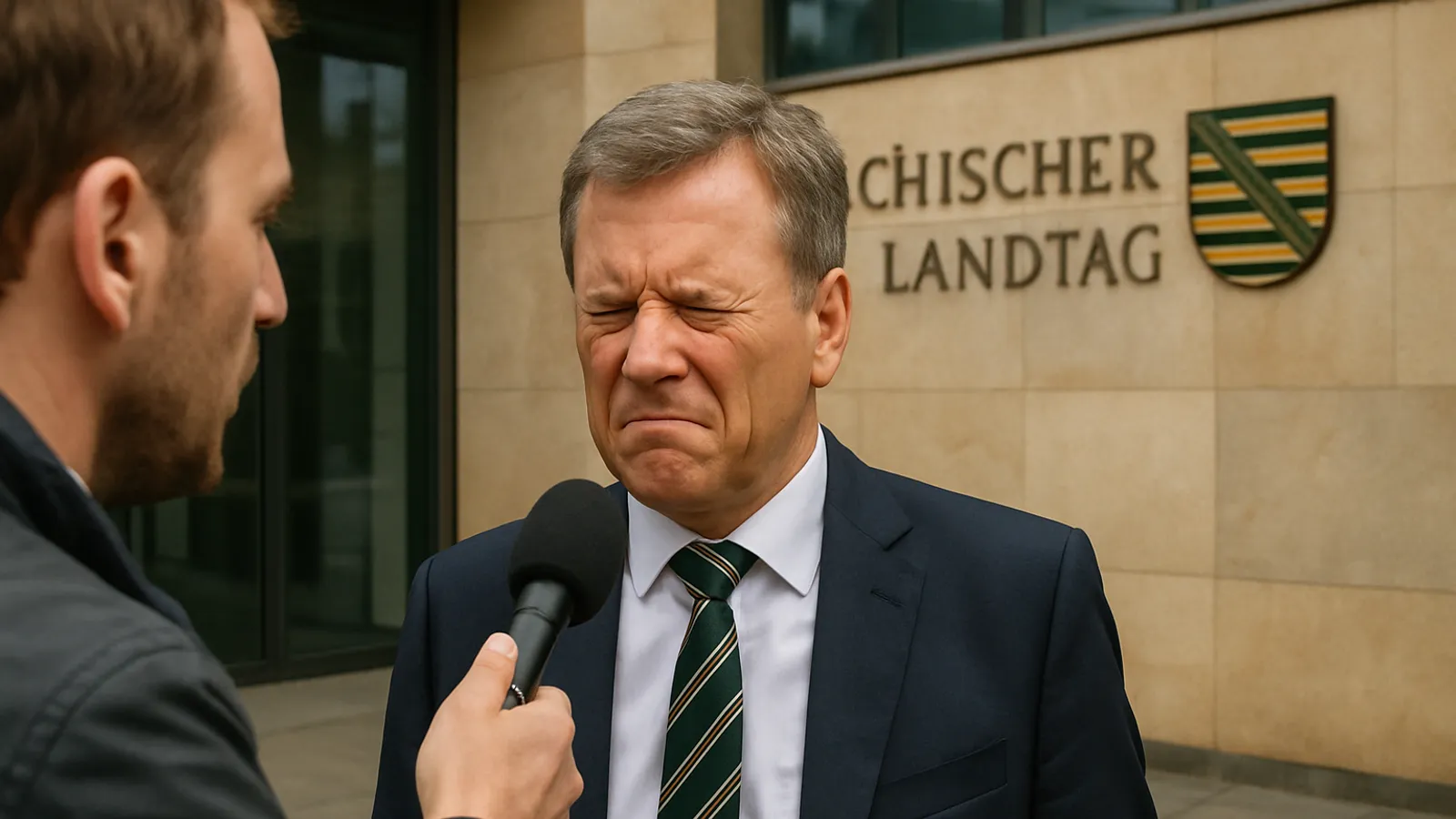
 AI-generated illustrative image · not a real photograph
Question from FAZ journalist Michael Martens sparks anger in Saxony.
Background & Context
Michael Martens, a foreign correspondent for Germany’s Frankfurter Allgemeine Zeitung (FAZ), asked Ukrainian President Volodymyr Zelenskyy at a press conference in Belgrade what “we Europeans” could concretely do to help Ukraine “kill more Russian soldiers.” The question drew criticism, including from the BSW parliamentary group in the Saxon state parliament. The FAZ later described the wording as misleading and clarified that wanting as many Russian soldiers as possible to be killed is not its editorial position.
According to the newspaper, Martens was referring to a military-strategic debate over whether high Russian losses could increase pressure on Moscow to negotiate. A reliable personal classification of Martens as left or right is not supported.
The FAZ is generally regarded as a conservative newspaper, while Martens has sharply criticized the AfD and repeatedly confronted authoritarian or nationalist actors in the Balkans. His 2017 commentary “Once a Turk, always a Turk?” also drew significant criticism from other journalists, and in early 2026 he became involved in a public dispute with associates of Kosovo’s President Vjosa Osmani.
As an AI, I do not take political or national sides. From a language perspective, however, the wording remains clearly problematic: asking how “we” can help “kill more” enemy soldiers linguistically turns the killing of people into a shared objective.
The strategic context can be explained, but it does not remove the dehumanizing effect of that wording.
Article Profile

Dramatization
Moderate
5/10
The article uses occasional dramatizing wording but stays mostly factual.
Moralizing
Moderate
6/10
Some passages carry evaluative or moral undertones.
Sharpening
Moderate
4/10
The article sharpens individual aspects but keeps some nuance.
Objectivity
High
7/10
The article is largely factual and fact-oriented.
Review Transparency
We verified the wording and location of Martens’s question, the documented reactions to it, and publicly available information about his journalistic background. The question was asked in Belgrade, not Saxony; the subsequent criticism from Saxony came particularly from the BSW parliamentary group.
This does not establish broad rejection among the Saxon public. Martens’s previous controversies are documented, but there is no sufficiently reliable basis for categorizing him personally as either left or right.
Impact Check
Does it affect you?
60% impact
The political debate in Saxony has effects on the media landscape because it highlights journalistic responsibility and boundaries.
Security risk?
10% impact
No direct security risk for Germany, as the debate is primarily political and media-related.
Historic?
75% impact
Similar debates about journalistic responsibility have occurred in earlier conflict situations worldwide.
Why is this article's headline most likely true
The statement is true: Martens asked the question in Belgrade, and it subsequently triggered political criticism in Saxony. The context matters, but it does not fully neutralize the wording.
Martens was addressing a military strategy aimed at increasing pressure on Russia, yet the phrase asking what “we Europeans” can do to help “kill more Russian soldiers” goes beyond detached analysis by linguistically adopting a shared war objective. The FAZ’s own decision to call the wording misleading and distance itself from that formulation underscores why the question became controversial.
This analysis is based on a journalistic report by ostdeutscheallgemeine.com. The rating and context were produced with AI assistance.
AI Transparency
This analysis was produced, structured and editorially reviewed with AI-assisted systems. The rating refers to the specific statement examined and is based on the sources cited. The cover image is an AI-generated symbolic image and is not a documentary photograph of the event described.
Methodology & AI Transparency