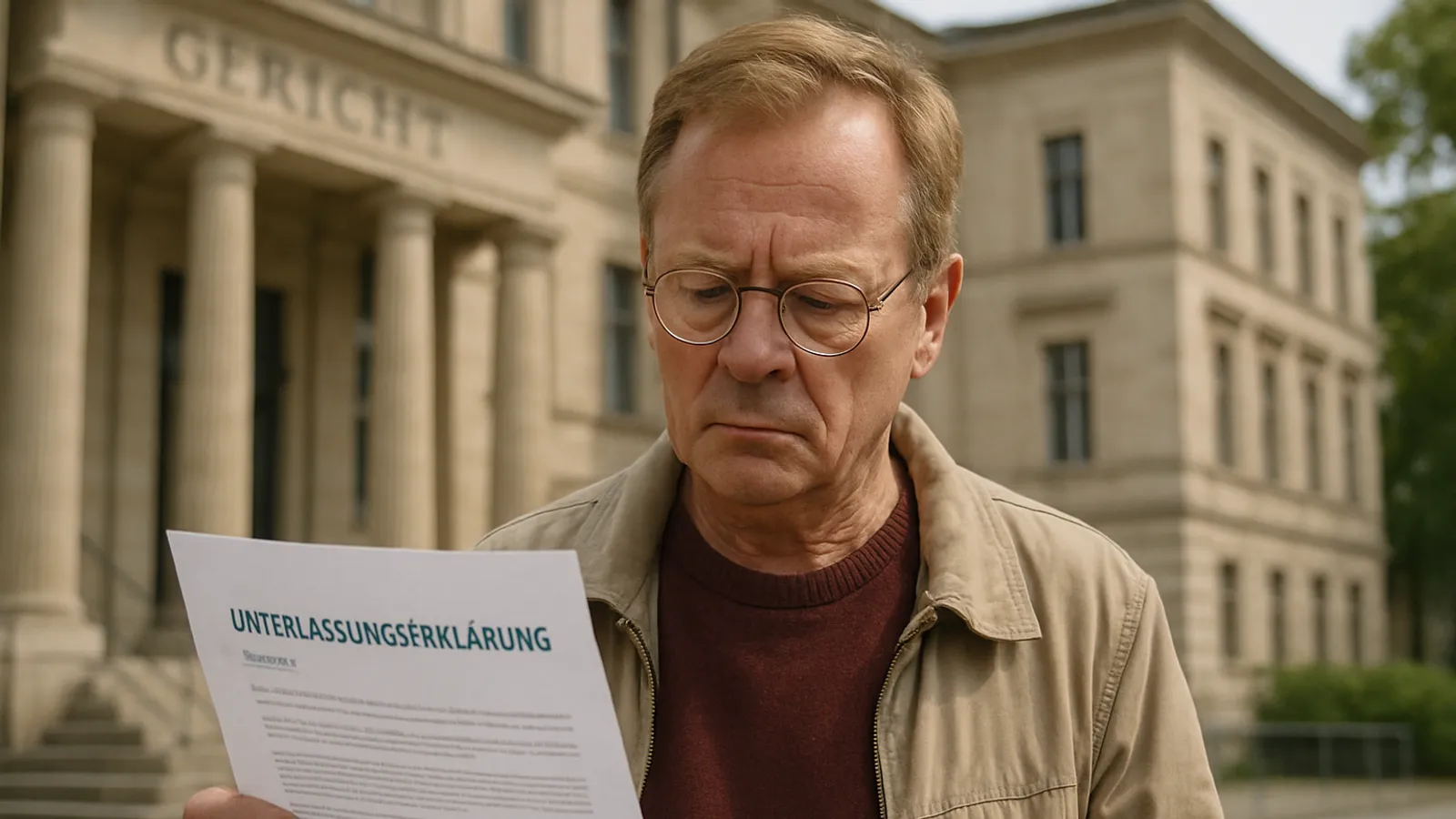
 AI-generated illustrative image · not a real photograph
Uwe Steimle: Cease-and-desist declaration after Stauffenberg remark — no remorse
Background & Context
German cabaret artist and satirist Uwe Steimle made the remark at an event hosted by the AfD (Alternative for Germany), a right-wing party. Referring to Chancellor Friedrich Merz, he asked where Stauffenberg was “when you really need him.” Claus Schenk Graf von Stauffenberg was a German resistance officer who led the failed July 20, 1944 attempt to assassinate Adolf Hitler.
After legal action, Steimle issued a cease-and-desist declaration to the Stauffenberg family and pledged not to invoke the resistance fighter’s name in this context again. Steimle explicitly refused to apologize for his remark, and his attorney said there had been no change of heart.
At the same time, through his attorney, Steimle expressed deep regret over the media’s escalation of the matter. The headline “no remorse” therefore compresses this mixed public response into an interpretive judgment.
Article Profile

Dramatization
Low
3/10
The article covers the topic largely soberly, without dramatic exaggeration.
Moralizing
Moderate
5/10
Some passages carry evaluative or moral undertones.
Sharpening
Moderate
5/10
The article sharpens individual aspects but keeps some nuance.
Objectivity
Low
3/10
The presentation is not very factual and strongly evaluative.
Review Transparency
It cannot be assessed whether Uwe Steimle feels remorse personally or in private; only his publicly documented response can be evaluated. He explicitly did not apologize for the remark; his attorney says there was no change of heart.
At the same time, regret over the media’s escalation was expressed. The phrase “no remorse” thus goes beyond the directly documented facts and evaluates Steimle’s stance.
The headline is accordingly sharpened; the strongest judgment comes from the outlet itself and is not a quote from Steimle.
Impact Check
Does it affect you?
60% impact
The debate over Steimle’s remarks could influence public opinion and the image of public figures, as societal reactions are highly polarized.
Security risk?
10% impact
No direct security risk in Germany, as the remarks are locally confined and pose no immediate threats.
Historic?
75% impact
Comparable controversies over historical analogies in public discourse have occurred repeatedly in the past, underscoring the sensitivity of such topics.
Why is this article's headline most likely opinion piece
The headline should be understood as an evaluative judgment. It is documented that after his Stauffenberg remark, Uwe Steimle issued a cease-and-desist declaration, explicitly refused to apologize for the remark, and showed no change of heart.
At the same time, through his attorney, he expressed regret over the media’s escalation of the matter. Whether this overall amounts to “no remorse” is therefore not an objectively ascertainable fact but a journalistic assessment of his public response.
This analysis is based on a journalistic report by bild.de. The rating and context were produced with AI assistance.
AI Transparency
This analysis was produced, structured and editorially reviewed with AI-assisted systems. The rating refers to the specific statement examined and is based on the sources cited. The cover image is an AI-generated symbolic image and is not a documentary photograph of the event described.
Methodology & AI Transparency