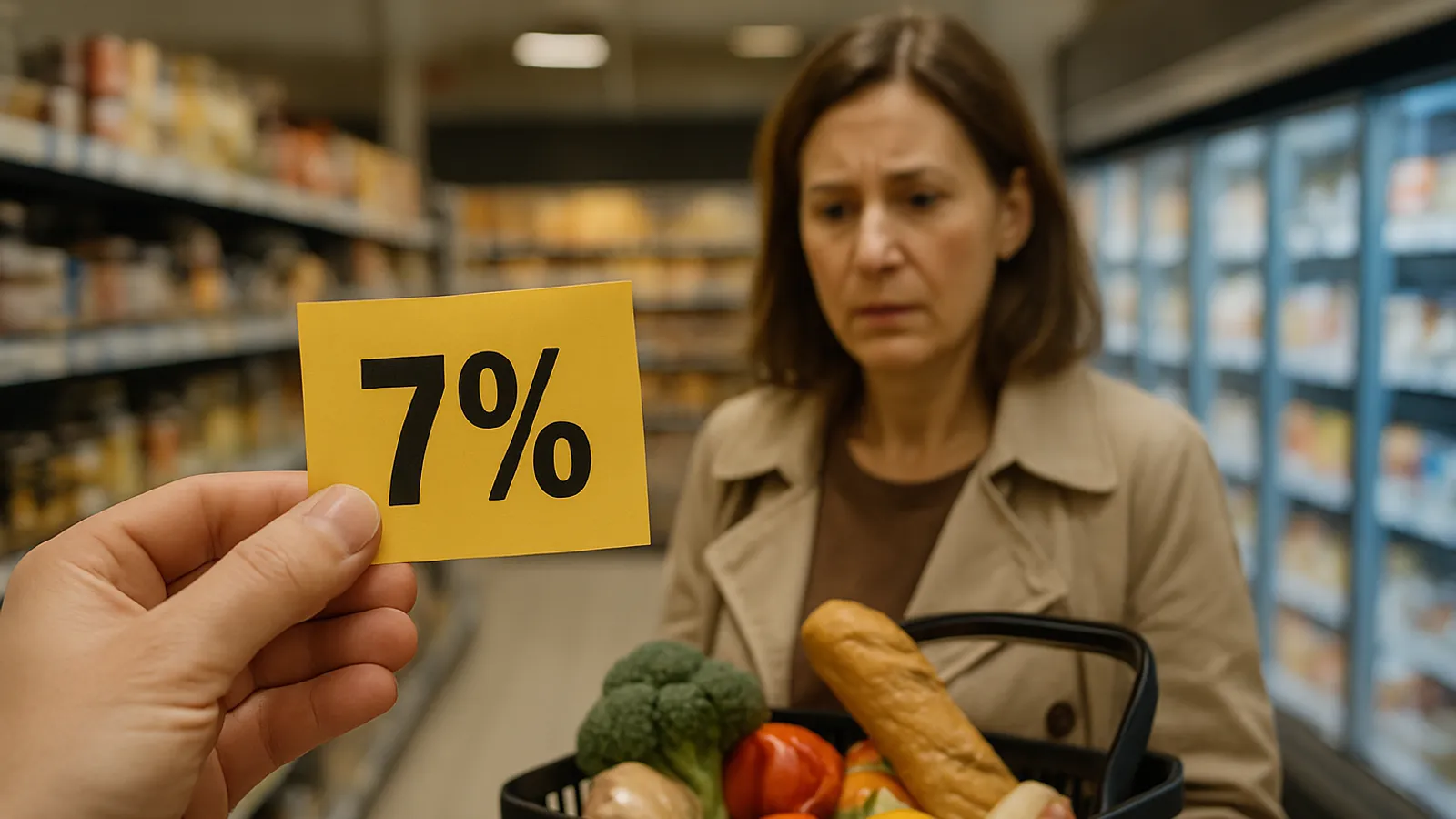
 AI-generated illustrative image · not a real photograph
Clemens Fuest, president of Germany’s ifo Institute, wants to abolish the reduced VAT rate.
Background & Context
Clemens Fuest, president of Germany’s ifo Institute for economic research, has explicitly called for abolishing the country’s reduced value-added tax, or VAT, rate of 7% and moving toward a more uniform system. VAT is a nationwide consumption tax.
Germany’s standard rate is 19%, while the reduced 7% rate applies to many foods, books, newspapers, public transportation services, and other selected goods and services. The system includes numerous exceptions and difficult classification rules.
Fuest argues that the reduced rate is not a well-targeted social policy. Low-income households benefit from lower food prices, but households with higher overall spending receive a larger share of the tax benefit in absolute euro terms.
He therefore proposes replacing the broad tax reduction with targeted direct payments to lower-income households. However, absolute and relative effects must be distinguished.
Lower-income households may receive a smaller benefit in euros, but they spend a much larger share of their disposable income on food and other necessities. Without sufficient compensation, abolishing the reduced rate could therefore place a proportionally heavier burden on them.
The effect on consumer prices would also depend on how much of the higher tax businesses pass on to customers. The revenue and relief figures cited by Fuest are model calculations, not guaranteed budget outcomes.
Article Profile

Dramatization
Low
3/10
The article covers the topic largely soberly, without dramatic exaggeration.
Moralizing
Low
2/10
The presentation largely avoids moral judgments.
Sharpening
Low
3/10
The article is nuanced and avoids confrontational sharpening.
Objectivity
High
7/10
The article is largely factual and fact-oriented.
Review Transparency
We reviewed Fuest’s publicly reported proposal, his reasoning, and the illustrative calculations he cited. The actual price effects, changes in consumer behavior, required compensation payments, and effects on individual categories of goods and services have not been conclusively calculated.
Impact Check
Does it affect you?
60% impact
Consumers in Germany could be affected by price increases, since abolition would mean higher costs for everyday goods.
Security risk?
10% impact
No direct security risk, since the demand merely initiates an economic policy discussion.
Historic?
75% impact
Debates about VAT rates are historically recurring, as tax revenues and consumer behavior are often discussed.
Why is this article's headline most likely true
The statement is true: Fuest explicitly calls for abolishing Germany’s reduced VAT rate and replacing it with targeted support for low-income households. His proposal could simplify the tax system and make public assistance more targeted.
Without reliable compensation, however, higher prices for food and other necessities could disproportionately burden lower-income households.
This analysis is based on a journalistic report by n-tv.de. The rating and context were produced with AI assistance.
AI Transparency
This analysis was produced, structured and editorially reviewed with AI-assisted systems. The rating refers to the specific statement examined and is based on the sources cited. The cover image is an AI-generated symbolic image and is not a documentary photograph of the event described.
Methodology & AI Transparency